

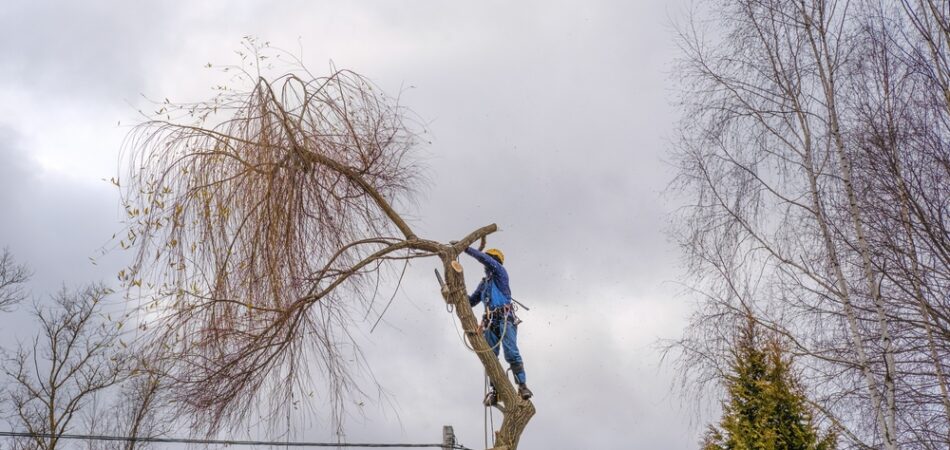
Trees are a major part of what makes Long Island neighborhoods attractive, but aging, damaged, or unstable trees can become a serious concern for nearby homes, driveways, fences, and utility lines. Coastal storms, strong winds, saturated soil, pests, and years of environmental stress can all weaken a tree long before it falls.
A tree may need to be removed when it is dead, structurally unstable, severely diseased, leaning unexpectedly, losing large limbs, damaging nearby structures, or showing major root problems. Not every damaged tree requires removal, but these warning signs deserve closer attention, especially when the tree could fall toward a house, street, neighboring property, or power line.
What Long Island Property Owners Should Know
-
A new or worsening lean can indicate root failure or structural instability, particularly after heavy rain or strong winds.
-
Long Island properties can experience tree stress from coastal storms, wet soil, salt exposure, insects, and seasonal weather changes.
-
Dead branches do not automatically mean the entire tree must come down, but widespread dieback can indicate a larger problem.
-
Trees near homes, garages, driveways, sidewalks, and utility lines deserve extra attention because the consequences of failure are greater.
-
Local tree removal requirements can vary among Long Island towns and incorporated villages, so property owners should check applicable rules before removing a regulated tree.
Why Tree Condition Matters on Long Island
Tree condition matters on Long Island because local properties regularly experience wind, heavy rain, coastal weather, saturated ground, and seasonal storms that can expose weaknesses in trunks, branches, and root systems.
A tree that appears stable during calm weather may behave very differently when the canopy is loaded by wind or the soil around its roots becomes saturated. This is particularly important across Nassau County and Suffolk County, where mature trees often grow close to homes, roads, fences, pools, and overhead utilities.
Integrity Tree Care helps property owners evaluate trees that may pose a concern and determine whether pruning, monitoring, or removal is the more appropriate option. Our goal is to help you understand what the tree is telling you before a manageable problem becomes more difficult.
Local Tree Conditions We Commonly Watch For
On Long Island, the tree conditions worth watching most closely include storm damage, declining canopies, compromised roots, trunk defects, and changes that appear after periods of strong wind or saturated soil.
Properties in communities from Huntington and Smithtown to Garden City, Massapequa, Brookhaven, and surrounding areas can contain mature trees that have been exposed to decades of changing weather. Coastal portions of the Island may also experience salt and storm exposure that places additional stress on certain trees.
A useful habit is to visually inspect mature trees after major storms. From a safe distance, look for hanging branches, fresh cracks, changes in lean, exposed roots, or disturbed soil around the base.
7 Signs a Tree May Need to Be Removed
A tree may need professional evaluation for removal when it shows significant structural failure, widespread decline, root instability, or damage that cannot reasonably be corrected through pruning or other tree care.
1. The Tree Is Dead or Mostly Dead
A dead or severely declining tree may need removal because it can gradually lose structural strength as branches and wood deteriorate.
Look for extensive areas without leaves during the normal growing season, brittle branches, peeling bark, or a canopy that has continued to decline. One dead limb is different from an entire dead tree. If most of the canopy has stopped producing healthy growth, a professional assessment is appropriate.
This becomes especially important when the tree stands close to a Long Island home, sidewalk, parking area, or frequently used portion of the yard.
2. The Tree Has Developed a New or Significant Lean
A newly leaning tree may indicate movement in the root system or soil and should be evaluated promptly, particularly if the lean appeared after a storm.
Some trees naturally grow at an angle and remain stable for many years. The more concerning situation is a noticeable change in position, especially when accompanied by lifted soil, exposed roots, cracks in the ground, or movement around the root plate.
After periods of heavy rain, Long Island soil can become saturated, reducing the support around compromised roots. A tree leaning toward a house or neighboring property deserves particular attention.
3. There Are Major Cracks or Splits in the Trunk
Large trunk cracks or splits may indicate that a tree has lost important structural support and could be more vulnerable to failure.
Pay attention to deep vertical cracks, separating trunks, damaged branch unions, and openings that appear to extend significantly into the wood. Multi-stem trees can sometimes develop weak connections where large trunks meet.
Small bark irregularities do not necessarily mean removal is required. The concern increases when a defect affects a major portion of the trunk or supports a large canopy over a home, driveway, patio, or street.
4. Large Branches Are Dying or Falling
Repeated loss of large branches can indicate declining tree health or structural weakness that requires professional evaluation.
An occasional small dead branch is common in mature trees. Multiple large dead limbs, broken branches caught in the canopy, or repeated limb failures are more concerning.
Long Island windstorms and nor’easters can expose weak branch attachments that were difficult to notice beforehand. Hanging branches should never be pulled down from underneath or approached when they are tangled near utility lines.
5. The Roots Appear Damaged or Unstable
Major root damage may make tree removal necessary because roots provide both structural support and access to water and nutrients.
Warning signs can include exposed or severed roots, soil lifting around the trunk, construction damage, decay near the root flare, or a tree that begins shifting after heavy rainfall. Excavation, driveway work, grading, and other property improvements can also damage important roots.
Because much of a tree’s root system is underground, serious problems are not always obvious from the surface. Changes at the base of a mature tree should be taken seriously.
6. Decay or Cavities Affect Important Structural Areas
Extensive decay in the trunk or major branches can reduce the amount of sound wood supporting a tree.
Hollows, cavities, soft wood, fungal growth, and areas of visible deterioration deserve attention, particularly near the base or where major trunks divide. A hollow tree is not automatically unsafe, and some trees can remain standing for many years with cavities.
The key question is whether enough sound structure remains to support the tree under the conditions it experiences on the property. That determination is better made through an on-site assessment than from appearance alone.
7. The Tree Is Threatening Structures or Utilities
A tree may need removal when its condition creates an unacceptable risk to a home, garage, utility line, driveway, road, or another frequently occupied area.
Location matters when evaluating tree risk. The same damaged tree can present very different concerns depending on what is within falling distance.
Across densely developed portions of Nassau County and western Suffolk County, mature trees may stand only a short distance from houses and neighboring properties. Trees growing near overhead electrical equipment require additional caution. Never attempt to remove branches or trees that are contacting or dangerously close to energized lines.
When Should You Call a Tree Professional?
You should call a tree professional when a tree has a new lean, major trunk damage, hanging limbs, widespread decline, significant root disturbance, or another defect that could affect people or property.
Homeowners can safely perform visual checks from the ground. You can look for changes in canopy density, broken branches, cracks, mushrooms around the base, or movement in the surrounding soil.
DIY inspection should stop when climbing, chainsaw work, large branches, unstable trees, or electrical lines become involved. Large-tree removal requires careful planning because the direction of weight, nearby structures, access, and rigging can all affect how the work should be performed.
What Commonly Causes Dangerous Trees on Long Island?
The most common contributors to hazardous trees on Long Island include storm damage, age-related decline, root problems, pests or disease, construction disturbance, and prolonged environmental stress.
Strong coastal winds can break branches or worsen existing structural weaknesses. Heavy rainfall can saturate soil and increase concerns around trees with already compromised root systems. Older residential neighborhoods may also contain mature trees that have experienced years of pruning, construction, driveway installation, or changes in surrounding soil.
In some coastal communities, repeated salt exposure and flooding can add another source of stress. The cause is not always obvious, which is why evaluating the entire tree and its surroundings is important.
Can Tree Removal Be Prevented?
Some tree removals can be prevented through early inspection, appropriate pruning, and protection of roots, but trees with severe structural or health problems may eventually need to come down.
Avoid unnecessary damage around mature trees when installing patios, driveways, utilities, fencing, or landscaping. Watch for abrupt changes in canopy health and inspect trees after major storms.
Routine pruning can also address certain dead, damaged, or poorly positioned branches before they become larger problems. Pruning cannot correct every structural defect, however, and excessive or improper cutting can create additional stress.
What Should You Expect From a Professional Tree Evaluation?
A professional tree evaluation should help determine whether the tree can reasonably be maintained or whether removal is the safer long-term option.
The tree’s species, condition, trunk, canopy, visible roots, surrounding targets, access, and recent changes can all influence that decision. In some cases, pruning and continued observation may be appropriate. In others, advanced decay or instability may make removal the practical choice.
A responsible recommendation should be based on the individual tree rather than assuming every damaged tree needs to be removed.
Common Tree Removal Mistakes
The biggest tree removal mistakes are waiting too long after major warning signs appear, attempting dangerous DIY work, and assuming every damaged tree must immediately be removed.
Mistake: Ignoring a newly leaning tree.
Consequence: Root movement or instability may continue unnoticed.
Better approach: Keep people away from the fall zone and arrange an evaluation.
Mistake: Cutting large branches without understanding their weight.
Consequence: Branches can swing, split, or fall unexpectedly.
Better approach: Leave large or elevated limb removal to properly equipped professionals.
Mistake: Assuming storm damage always means total removal.
Consequence: A tree that could potentially be retained may be removed unnecessarily.
Better approach: Have the remaining structure evaluated first.
Mistake: Forgetting about local requirements.
Consequence: Removal may conflict with town or village rules.
Better approach: Confirm applicable requirements before work begins.
A Common Long Island Tree Scenario
A common Long Island scenario is a mature backyard tree that looks acceptable for years but begins showing problems after a strong storm.
A homeowner may first notice a large broken limb, followed by a new lean or raised soil near one side of the trunk. Because the tree is still standing and producing leaves, it can be tempting to assume the danger has passed.
Those changes are reasons for an assessment, not automatic proof that removal is necessary. Evaluating the roots, trunk, remaining canopy, and nearby structures can help determine the next step.
Which Tree Services Can Address These Problems?
Tree inspection, selective pruning, hazardous limb removal, and complete tree removal can address different levels of tree damage depending on the condition of the tree.
Not every problem calls for the same solution. Pruning may be appropriate for isolated dead limbs, while significant structural failure or a dead tree may require removal. The right approach depends on what can safely be preserved.
Tree Pruning vs. Tree Removal: Which Is Better?
Pruning is generally the better option when a tree remains structurally viable and the problem can be corrected by removing specific branches, while removal may be appropriate when the entire tree presents an unacceptable concern.
Keeping a healthy mature tree can preserve shade and landscape value. Removal becomes more reasonable when major root failure, extensive decay, death, or severe structural damage leaves few practical corrective options.
The objective should be to solve the actual problem rather than automatically choosing the most drastic solution.
What Areas of Long Island Can Have Tree Removal Concerns?
Tree removal concerns occur throughout Long Island, including Nassau County and Suffolk County communities where mature trees grow close to homes, streets, utilities, and neighboring properties.
Conditions can differ between densely developed areas such as Garden City and Massapequa, wooded portions of Huntington and Smithtown, and coastal communities exposed to heavier salt and wind. Each property should be evaluated based on its individual trees and surroundings.
What Can Happen If You Ignore a Hazardous Tree?
Ignoring a seriously compromised tree can increase the chance of falling branches, property damage, blocked access, or complete tree failure during future storms.
Waiting can also make removal more complicated if the tree continues to deteriorate. A tree that can be addressed under normal conditions may become an urgent problem after wind or heavy rain.
The goal is not to remove every imperfect tree. It is to identify meaningful warning signs early enough to make a deliberate decision.
Frequently Asked Questions About Tree Removal on Long Island
How do I know if a tree on my Long Island property is dangerous?
A potentially dangerous tree may show a new lean, large dead branches, trunk cracks, root movement, extensive decay, or significant canopy decline. No single symptom always proves a tree must be removed. If the tree could strike a house, driveway, road, or neighboring property, arrange a professional evaluation.
Does a leaning tree on Long Island always need to be removed?
No, a leaning tree does not always need to be removed because some trees naturally grow at an angle and remain structurally stable. A new or increasing lean is more concerning, especially after heavy rain or wind. Raised soil or visible root movement around the base should also prompt an assessment.
Should I inspect my trees after a Long Island storm?
Yes, visually inspecting trees after a strong Long Island storm can help identify fresh damage before it becomes harder to manage. From the ground, look for hanging limbs, broken branches, new trunk cracks, leaning, exposed roots, or disturbed soil. Stay clear of damaged trees and any nearby electrical lines.
Can a dead tree stay standing on a Long Island property?
A dead tree can remain standing for some time, but continued deterioration can make branch or trunk failure more likely. The level of concern depends heavily on location. A dead tree beside a home, driveway, playground, sidewalk, or street generally deserves faster attention than one in an isolated area.
Do I need permission to remove a tree on Long Island?
Tree removal requirements can vary by town, village, property type, and the location or size of the tree. Long Island does not have one simple rule that applies to every property. Before removing a significant tree, check the requirements of your specific Nassau County or Suffolk County municipality.
Can tree roots damaged during construction cause problems later?
Yes, significant root damage during construction can affect a tree months or even years after the original work. Excavation, trenching, grading, soil compaction, and driveway installation can remove or damage structural roots. If a mature tree begins declining or leaning after nearby construction, a professional assessment is worthwhile.
Is tree removal more urgent during Long Island storm season?
Tree removal can become more urgent when a tree already has serious defects and periods of high wind or heavy rain are approaching. Storms place additional force on canopies and can destabilize compromised trees. The best time to evaluate a questionable tree is before severe weather creates an emergency.
Can a damaged Long Island tree be saved instead of removed?
Yes, some damaged trees can be retained when the trunk and root system remain sufficiently sound and the damaged portions can be managed safely. Appropriate pruning may address isolated broken or dead branches. Severe root failure, extensive decay, or major structural defects may make removal the more practical option.
Protect Your Long Island Property Before a Tree Problem Gets Worse
Recognizing the warning signs early gives you more time to make an informed decision about pruning, monitoring, or tree removal. Our team can evaluate concerning trees and help you understand the most appropriate next step for your property.