A mature tree can add shade, privacy, and character to an Islip property, but a damaged or declining tree can also create serious concerns around homes, driveways, utility lines, and neighboring properties. Long Island storms, coastal winds, saturated soil, and aging trees can turn an existing weakness into a more urgent problem.
Quick answer: Tree removal is generally necessary when a tree is dead, structurally unstable, severely diseased, badly storm-damaged, or creating a hazard that cannot reasonably be corrected through pruning or other tree care. For homeowners in Islip, NY, the decision should account for the tree’s condition, its surroundings, and the potential consequences if branches or the entire tree fail.
What local homeowners should know
-
A leaning tree is not automatically dangerous, but a new or increasing lean can indicate root or structural problems that deserve professional evaluation.
-
Storms and strong winds across Suffolk County can expose weak limbs, compromised trunks, and damaged root systems.
-
Trees growing close to homes, garages, driveways, streets, and overhead utilities require additional attention because there is less room for failure.
-
Removal is not always the first solution. Depending on the condition of the tree, pruning or ongoing monitoring may be appropriate.
-
Cracks, decay, dead limbs, root damage, and changes in the surrounding soil can all help determine whether a tree has become unsafe.
Why Is Tree Removal Sometimes Necessary in Islip?
Tree removal becomes necessary in Islip when a tree’s condition or location creates an unacceptable risk that cannot be adequately addressed through less invasive tree care. Local properties often place mature trees near houses, fences, roads, neighboring yards, and utility infrastructure, making structural problems particularly important to identify.
Long Island’s weather also matters. Strong thunderstorms, coastal weather systems, heavy rain, occasional snow and ice, and periods of high wind can place additional stress on weakened trees.
Soil conditions can change after prolonged rainfall, too. A tree that appears relatively stable may deserve closer attention if its roots have been damaged or the surrounding ground begins shifting.
Integrity Tree Care helps property owners evaluate tree concerns and determine appropriate tree care solutions. When we assess a tree, the goal is to consider its condition along with what is around it rather than assuming every damaged or declining tree needs removal.
What Do Local Tree Conditions Tell Homeowners?
Local tree conditions can reveal problems through changes in the trunk, canopy, roots, and surrounding ground. Homeowners can often spot visible warning signs, but determining how those symptoms affect structural stability generally requires a closer assessment.
Without client-provided inspection records or verified local tree-removal statistics, specific percentages or failure rates should not be presented as fact. From a practical tree-care perspective, the most useful approach is to evaluate each tree individually, particularly after severe weather or noticeable changes in its condition.
How Can a Hazardous Tree Affect an Islip Property?
A hazardous tree can affect an Islip property by threatening buildings, vehicles, landscaping, access areas, and people if a major limb or the tree itself fails. The potential impact depends heavily on where the tree stands and what would be within its fall zone.
A compromised tree beside an open portion of a large property presents a different situation from one overhanging a roof, driveway, sidewalk, or neighboring yard. Trees near overhead utility lines can introduce additional concerns and should be approached cautiously.
Early evaluation can also provide more options. Waiting until a tree partially fails may turn a planned tree-care decision into a more complicated situation.
What Are the Warning Signs That a Tree May Need Removal?
Warning signs that a tree may need removal include extensive dieback, serious trunk defects, root problems, severe storm damage, and sudden changes in the tree’s position. No single symptom automatically means removal is required, but several problems occurring together can justify prompt professional attention.
Watch for:
-
Large dead branches throughout the canopy.
-
Deep cracks or splits in major limbs or the trunk.
-
Significant cavities, decay, or visibly deteriorated wood.
-
A new lean or a lean that appears to be increasing.
-
Soil lifting or cracking around the root zone.
-
Exposed, cut, damaged, or decaying major roots.
-
Major limbs broken during a storm.
-
A tree that has largely or completely died.
After severe weather in Suffolk County, homeowners should also look for hanging branches and newly damaged sections that may not have been present before the storm.
When Should You Call a Tree Professional?
You should call a tree professional when a tree shows significant structural damage, sudden leaning, large dead limbs, root disturbance, or other conditions that could affect people or property. Minor changes can sometimes be monitored, but potential structural hazards should not be diagnosed or handled from the ground without appropriate expertise.
Homeowners can safely observe a tree from a distance and note changes in its canopy, trunk, and surrounding soil. Avoid climbing a questionable tree, standing beneath hanging limbs, or attempting to cut large branches yourself.
Trees touching or located very close to utility lines require particular caution. Do not attempt DIY cutting around energized overhead lines.
What Commonly Causes Trees to Become Unsafe on Long Island?
Trees on Long Island can become unsafe because of storm damage, decay, root problems, disease, poor structure, or changes around the tree. In Islip and surrounding communities, weather exposure and property development can combine with natural aging to gradually reduce a tree’s stability.
Common contributors include:
-
Storm and wind damage: Strong winds can break limbs or worsen existing structural defects.
-
Root disturbance: Excavation, construction, grading, and soil changes can affect important roots.
-
Decay: Internal or external decay may weaken portions of the trunk or major branches.
-
Poor branch structure: Certain branch arrangements can be more susceptible to splitting under stress.
-
Decline or death: A tree that has died or substantially declined may progressively lose structural integrity.
-
Changing site conditions: Drainage changes, soil compaction, and nearby construction can affect trees over time.
Properties near communities such as Bay Shore, East Islip, Central Islip, and Great River can face many of the same regional weather stresses.
Can Tree Removal Be Prevented With Maintenance?
Some tree removals can be avoided or delayed through appropriate inspection, pruning, and maintenance, although maintenance cannot make every compromised tree safe. Identifying weak branches and other developing problems before major failure occurs gives Islip homeowners a better opportunity to consider alternatives.
Periodically look at mature trees from several angles. Check for newly dead limbs, broken branches, trunk cracks, mushrooms or other signs of decay near the base, and changes in soil around the roots.
After significant storms, perform another visual check from a safe location. DIY work should stop where climbing, chainsaws, large limbs, unstable trees, or utility lines are involved.
What Should You Expect From Professional Tree Removal?
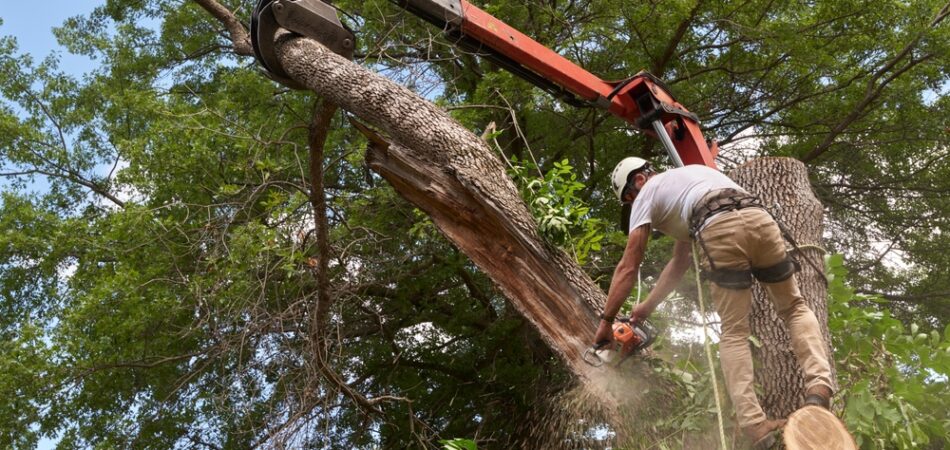
Professional tree removal should focus on safely managing the tree and the conditions surrounding it while minimizing avoidable impact to the property. The exact approach depends on the tree’s size, condition, location, access, nearby structures, and other site-specific constraints.
A tree in an open area may allow a different removal approach than a large tree positioned between a house, fence, driveway, and neighboring property. Tight residential sites in the Islip area can require more controlled handling of individual sections.
No responsible assessment should promise that removal is necessary until the actual tree and site conditions have been considered.
What Mistakes Should Islip Homeowners Avoid?
Islip homeowners should avoid assuming every damaged tree must come down or, at the opposite extreme, assuming a standing tree is automatically safe. Both approaches can lead to unnecessary expense or overlooked hazards.
Mistake: Removing a tree based only on appearance.
Consequence: A tree that could potentially be managed through other care may be lost unnecessarily.
Better approach: Have the condition and surroundings evaluated.
Mistake: Ignoring a newly leaning tree after a storm.
Consequence: Potential root or structural movement may go unnoticed.
Better approach: Keep away from the potential fall zone and arrange an assessment.
Mistake: Attempting large-tree removal as a DIY project.
Consequence: Falling wood, unstable trunks, equipment, and nearby structures can create substantial hazards.
Better approach: Use professional help when work involves large limbs, climbing, structural instability, or difficult surroundings.
What Is a Common Tree Removal Scenario in Islip?
A common Islip tree-removal scenario involves a mature tree near a house that develops visible damage following strong wind or saturated ground conditions. The homeowner may notice a broken leader, hanging limb, fresh trunk crack, altered lean, or disturbed soil around the base.
This is a representative local scenario, not a specific Integrity Tree Care project.
The correct response is not to assume the tree must immediately be removed. The condition of the roots, trunk, branches, and surrounding targets should first be considered. Depending on the findings, appropriate options could range from pruning and monitoring to removal.
Which Tree Services Can Address the Problem?
Tree pruning, tree assessment, and tree removal can address different levels of tree-related risk, with the appropriate service depending on the tree’s actual condition. Pruning may address certain branch problems, while removal may be appropriate when the entire tree presents a concern that cannot reasonably be corrected.
Our approach is to help homeowners understand the available tree-care options based on what is happening on their property.
Should You Prune or Remove a Problem Tree?
Pruning may be appropriate when a tree is fundamentally viable and the concern involves manageable branches, while removal may be appropriate when serious defects affect the tree as a whole. The decision should consider both the severity of the defect and the consequences of potential failure.
DIY monitoring can help homeowners identify changes, but DIY removal is a poor choice for large, leaning, storm-damaged, or structurally questionable trees. Professional evaluation is especially worthwhile when the tree could reach a house, road, neighboring property, or utility infrastructure.
Where Do We Provide Tree Care Around Islip?
Tree care in the Islip area serves homeowners dealing with many of the same Long Island weather and property conditions found throughout surrounding Suffolk County communities. The primary focus here is Islip, with nearby communities including East Islip, Central Islip, Bay Shore, and Great River.
What Can Happen If You Ignore a Hazardous Tree?
Ignoring a potentially hazardous tree can allow existing decay, damaged branches, or structural weaknesses to worsen before the next period of severe weather. For Islip homeowners, that can increase the possibility of damage to roofs, siding, vehicles, fences, landscaping, or neighboring property if failure eventually occurs.
Waiting can also reduce the opportunity to deal with a tree under controlled conditions. The objective is not to remove healthy trees unnecessarily, but to identify meaningful problems before they become emergencies.
FAQ About Tree Removal in Islip, NY
How do I know if a tree needs to be removed in Islip?
A tree may need removal in Islip if it is dead, severely damaged, structurally unstable, or creating a hazard that cannot reasonably be corrected through other tree care. Significant decay, major trunk cracks, root damage, widespread dead branches, or a new lean are all reasons to request a professional assessment.
Should I remove a leaning tree on my Islip property?
A leaning tree does not always need removal, but a new or increasing lean should be evaluated promptly. Pay particular attention to cracking or lifting soil near the roots. Because a compromised tree can fail unpredictably, avoid standing or parking within its likely fall area until its condition has been assessed.
Should trees be inspected after storms in Suffolk County?
Trees should be visually checked after significant Suffolk County storms, especially when high winds or saturated soil may have affected branches or roots. From a safe distance, look for hanging limbs, broken branches, fresh cracks, changed leaning, and disturbed soil. Significant changes deserve professional attention.
Can a dead tree be left standing in Islip?
A dead tree should be evaluated rather than automatically left standing near occupied or frequently used areas. Dead wood can deteriorate over time, potentially increasing the likelihood of branch or trunk failure. Location matters greatly, so a dead tree near a house, driveway, street, or neighboring property warrants particular attention.
Can pruning save a damaged tree?
Pruning can sometimes address damaged, dead, or poorly positioned branches when the rest of the tree remains suitable to retain. It cannot correct every trunk, root, or structural problem. An assessment can help determine whether pruning offers a reasonable solution or whether the underlying condition makes removal more appropriate.
Are Long Island storms hard on mature trees?
Long Island storms can place considerable stress on mature trees through wind, heavy rain, saturated soil, snow, or ice. Trees with pre-existing decay, damaged roots, weak branch attachments, or other defects may be more vulnerable. Homeowners should watch for noticeable changes following significant weather events.
Can I remove a large tree myself in Islip?
Large-tree removal is generally not an appropriate DIY project because falling limbs, heavy trunk sections, unstable wood, chainsaw use, and nearby structures create significant hazards. Trees close to utility lines require even greater caution. Homeowners can perform ground-level observations, but complex removal work should be left to professionals.
Does every diseased tree need to be removed?
No, a diseased tree does not automatically require removal because the appropriate response depends on the disease, extent of decline, structural condition, and location. Some problems may be manageable, while advanced decline or serious structural deterioration may change the recommendation. A tree-specific assessment is the best way to distinguish between those situations.
Protect Your Islip Property With the Right Tree Care Decision
Knowing when tree removal is necessary starts with recognizing meaningful changes and understanding how a tree’s location affects the consequences of failure. For local homeowners, timely assessment can help distinguish between a tree that needs maintenance and one that may need to be removed.
Get Clear Answers About a Problem Tree on Your Islip Property
We can help you evaluate concerning trees and understand which tree-care option makes sense for the condition and location of your property.